





Name Picker
Pick a name: shuffle the cards and turn them over one by one, with names, your own prizes and blanks, or numbers. Draw first or last, the odds are the same.
Loading…
How to use
- Tap the list above the game and write the items for the cards, or the players' names.
- Choose items, names or numbers for the cards; the line over the cards says how the round goes. Tap a card to shuffle.
- Take turns in any order, turning over any card. With names, a name drawn is safe and the last ones left win.
Why drawing order doesn't change the odds
Take five lots with one winner. The first person wins 1 time in 5. The second wins only if the first did not (4 in 5) and then picks the winner from the four left (1 in 4): 4/5 × 1/4 = 1/5. The third: 4/5 × 3/4 × 1/3 = 1/5, and so on to the last, who wins whenever nobody before did, again 1 in 5. The same holds for any number of lots and winners, on paper as well as on screen.
What changes as people draw is only what you know. Once someone ahead of you draws a blank, your chances go up; once someone draws the winner, they are gone. Counted before anyone draws, every place in the queue has the same chance.
When to draw lots
Whenever some people should get something and others should not, or everyone needs a number:
- Picking raffle or giveaway winners
- Prizes and blanks at a party or a year-end event
- Numbers for the order of turns, presentations or seats
- Who pays, treats or does the chore
- Picking one or more volunteers from a class or a team
Drawing lots and casting lots: meaning and history
Drawing lots, or casting lots, means leaving a choice to chance by picking hidden tokens: folded slips of paper, sticks, or straws, where whoever draws the shortest straw is the one who must do the task. It is one of the oldest ways to decide. In the Bible, lots are cast to choose Matthias as an apostle, and sailors cast lots in the story of Jonah, and the lot falls on him.
Choosing people by lot is called sortition. Ancient Athens picked most of its magistrates and its court juries this way, and from 370 BC used a device for it, the kleroterion.
Frequently asked questions
Does it matter who draws first?
No. The cards are shuffled with the browser's cryptographic random generator before anyone picks, so every turn and every card has the same chance to win.
Can I pick more than one winner?
Yes. With names on the cards, set anywhere from 1 winner to one fewer than the number of players: the last ones left win. With items, write a prize more than once, such as Coffee*2.
Can I draw numbers for the order of turns?
Yes. Choose Numbers: the cards carry 1 to the number of cards, one each, shuffled before anyone picks, so each card turned over is a place in the order.
Does it work in every browser?
It needs WebGL 2, which draws the cards and their table in 3D. Recent Chrome, Edge, Firefox and Samsung Internet have it, and Safari from version 15. Where it is missing (an old browser or device, hardware acceleration turned off, or WebGL blocked), the page says so instead of the game; the coin flip, ladder game and crocodile teeth game work without it.
More in Random Games
Flip a coin for heads or tails. The coin stands on its edge, spins like a top and falls on the side drawn before the spin, so heads and tails are exactly 50/50.
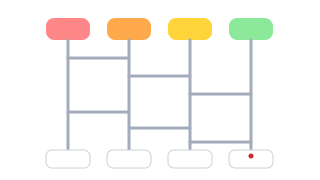
Draw a ladder for everyone and follow each line down to a penalty or prize. Every outcome is equally likely, wherever you stand.
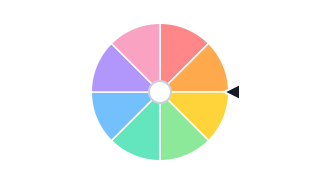
Make a custom wheel from names or your own items, such as penalties or lunch spots, and spin it to land on one at random. Every slice is equally likely.
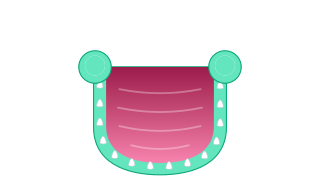
Take turns pulling the crocodile's teeth until one bites. The biting tooth is drawn before the first pull, so everyone has the same chance of being caught.
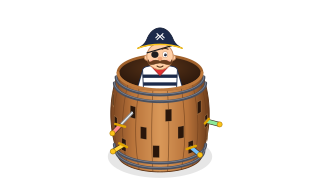
Take turns pushing swords into the barrel until one launches the pirate. That slot is drawn before the first sword, so everyone has the same chance.
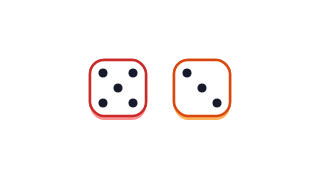
Tap or shake your phone and 3D dice tumble across the table: a D6, D20, D100 or any number of sides, up to six at once with the total. For game night or D&D.
A marble for each name races down a 3D trap tower; the order they finish picks a winner, a ranking or teams. A ranking's deciding marble ends in slow motion.
Split a list of names into random teams of even size, member by member or all at once.