





Coin Flip
Flip a coin for heads or tails. The coin stands on its edge, spins like a top and falls on the side drawn before the spin, so heads and tails are exactly 50/50.
Loading…
How to use
- Tap the coin to spin it. Hold a little longer to spin it harder.
- Watch it spin on its edge, then fall heads or tails.
- Spin again as often as you like: a run of the same side is counted.
Coin flip probability: is it really 50/50?
A fair coin comes up heads half the time and tails half the time, and every flip starts afresh: after five heads in a row, the next flip is still 1 in 2. Feeling that tails is "due" is known as the gambler's fallacy.
Real flips are very slightly less even. In 2023, 48 people flipped coins 350,757 times and found that a coin lands on the side it started on about 50.8% of the time, as Persi Diaconis and colleagues had predicted from the way a tossed coin wobbles. Here heads or tails is drawn with the browser's cryptographic random generator, so it is exactly 50/50 whichever side is up when you spin it.
How likely is a streak of heads or tails?
Runs of the same side come up more often than most people expect. Counting from any flip, the chance that the next ones all match it halves with each flip:
- The same side twice in a row: 1 in 2
- Three in a row: 1 in 4
- Four in a row: 1 in 8
- Five in a row: 1 in 16
- Ten in a row: 1 in 512
Over 100 flips, a run of six or more of the same side turns up about four times in five, and a run of seven or more, more often than not. A long streak is no sign that something is wrong with the coin.
When to flip a coin
Whenever two choices are equally good, or two people need a quick, fair call:
- This restaurant or that one, this film or that one
- Who goes first, or who takes the first turn
- Choosing ends or kick-off in football, or who bats first in cricket
- Settling a tie or a friendly bet between two people
- Yes or no, when you cannot make up your mind
A flip helps even if you ignore it: if you catch yourself hoping for one side while the coin is in the air, that is your answer.
Heads or tails: the history of the coin toss
People have tossed coins to decide things for about as long as there have been coins. Roman children played capita aut navia, "heads or ships", after the two-faced god Janus on one side of early bronze coins and the prow of a ship on the other. In England the same game was long called cross and pile.
Coin tosses have settled bigger questions too. Portland, Oregon got its name from one in 1845: its two founders, from Boston and from Portland, Maine, each wanted to name the town after home, and Francis Pettygrove of Maine won two tosses out of three. In 1903, Wilbur and Orville Wright tossed a coin for who would try their Flyer first; Wilbur won, but his attempt failed, and Orville made the first flight three days later.
Frequently asked questions
Is this coin flip really 50/50?
Yes. Heads or tails is decided with the browser's cryptographic random generator before the coin starts spinning, so each comes up exactly half the time, whichever side was up before. The spin you see only shows the result.
Can a coin land on its edge?
Here it stands and spins on its edge every time, but it always falls heads or tails. A real coin very rarely stays on its edge: about once in 6,000 tosses for a US nickel, by one estimate.
More in Random Games
Draw a ladder for everyone and follow each line down to a penalty or prize. Every outcome is equally likely, wherever you stand.
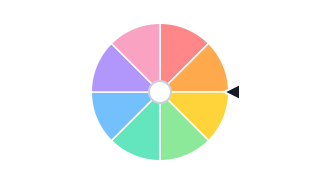
Make a custom wheel from names or your own items, such as penalties or lunch spots, and spin it to land on one at random. Every slice is equally likely.
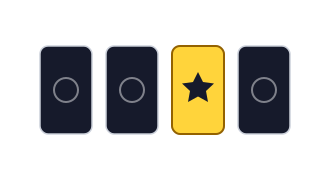
Pick a name: shuffle the cards and turn them over one by one, with names, your own prizes and blanks, or numbers. Draw first or last, the odds are the same.
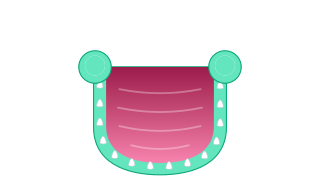
Take turns pulling the crocodile's teeth until one bites. The biting tooth is drawn before the first pull, so everyone has the same chance of being caught.
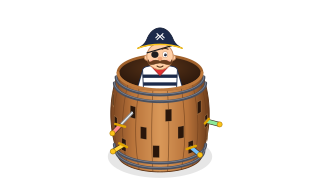
Take turns pushing swords into the barrel until one launches the pirate. That slot is drawn before the first sword, so everyone has the same chance.
Tap or shake your phone and 3D dice tumble across the table: a D6, D20, D100 or any number of sides, up to six at once with the total. For game night or D&D.
A marble for each name races down a 3D trap tower; the order they finish picks a winner, a ranking or teams. A ranking's deciding marble ends in slow motion.
Split a list of names into random teams of even size, member by member or all at once.